Which Companies Offer Two-Way Audio Surveillance Services
Protect Your Property Smarter with Two-Way Audio Surveillance Services
Two-way audio surveillance services redefine the role of CCTV systems for today’s business security. Rather than simply capturing video for later review, these systems allow real-time voice interaction between your monitoring centre and the physical site. They let operators speak through cameras, warn intruders, coordinate on-site staff, and verify incidents as they happen. For businesses and property owners across sectors such as retail, construction, warehousing, car parks, offices, and residential complexes, this shift from passive to interactive surveillance has major implications for loss prevention, operational safety, and compliance.If your organisation is exploring advanced security for high-risk environments, understanding which companies provide effective two-way audio surveillance services can help you choose the right fit.In this article, we’ll cover:
- What two-way audio surveillance services are and how they work
- Key provider types and how they differ
- A comparison of market options
- What to evaluate when choosing a provider
- Real-world outcomes with two-way audio surveillance
- Implementation checklist and ROI considerations
1. What Are Two-Way Audio Surveillance Services?
Traditional CCTV surveillance often focuses on capturing video footage, which is reviewed after an incident. In contrast, two-way audio surveillance services combine video feeds with live audio communication — effectively turning your security cameras into live communication devices managed by professional operators.At its core, a two-way audio surveillance system uses:
- Cameras with built-in or attached microphones and speakers
- A remote monitoring centre with trained security operators watching the video and audio feeds
- Real-time interaction where the operator can speak through the camera’s speaker, directing persons on-site or alerting security staff immediately
- Integration with alerts, alarms, access control or mobile apps so the system responds actively, not just passively
For example, when an operator detects suspicious behavior — such as someone loitering at a restricted entrance — they can speak through the camera: “You are trespassing. Leave the area immediately or security will be notified.” This voice-warning alone may deter the intruder, eliminating the need for physical intervention.According to an overview of two-way audio features from industry sources, this type of system enables immediate deterrence, remote visitor or delivery management, and improved situational control. (Montavue)
Why this matters for business premises
For commercial sites — especially large ones like warehouses, construction yards, retail outlets, logistics hubs, or multi-unit residential complexes — several risk factors make two-way audio particularly relevant:
- High-value assets (inventory, equipment, vehicles) that are vulnerable to theft or vandalism
- Wide or open outdoor/perimeter areas where on-site guards may not cover every angle
- High traffic zones (deliveries, visitors, contractors) where real-time verification is beneficial
- Regulatory obligations or insurance requirements that favour verified monitoring, not just recording
By adding live audio intervention, businesses gain a proactive layer of security — not just recording what happened, but stepping in as it happens.
2. Provider Types: Which Companies Offer These Services?
When exploring two-way audio surveillance services, you’ll find different types of providers, each with distinct strengths and trade-offs. Understanding their differences helps you choose a provider aligned with your needs.
Specialist Monitoring Firms
These companies focus exclusively on live monitoring, including two-way audio, voice intervention, and full incident verification. Because their core service is monitoring, they tend to offer faster response times, tailored protocols, and strong industry focus
.Example provider:
GCCTVMS — Their website describes how two-way audio surveillance “integrates traditional CCTV camera monitoring with real-time, two-way voice communication.” (gcctvms.com)
Strengths:
- Monitoring centres staffed 24/7 with trained operators
- Protocols and scripting specific to two-way audio use (voice warnings, escalation, staff coordination)
- Industry vertical specialisation (e.g., retail loss prevention, construction site surveillance, logistics hubs)
- Multi‐region support and language capabilities for global sites
Considerations:
- May require hardware upgrade (two-way cameras)
- Monthly monitoring fees can be higher than basic recording services
- Often focus primarily on monitoring, not large-scale installation or hardware integration
Security Integrators with Monitoring Services
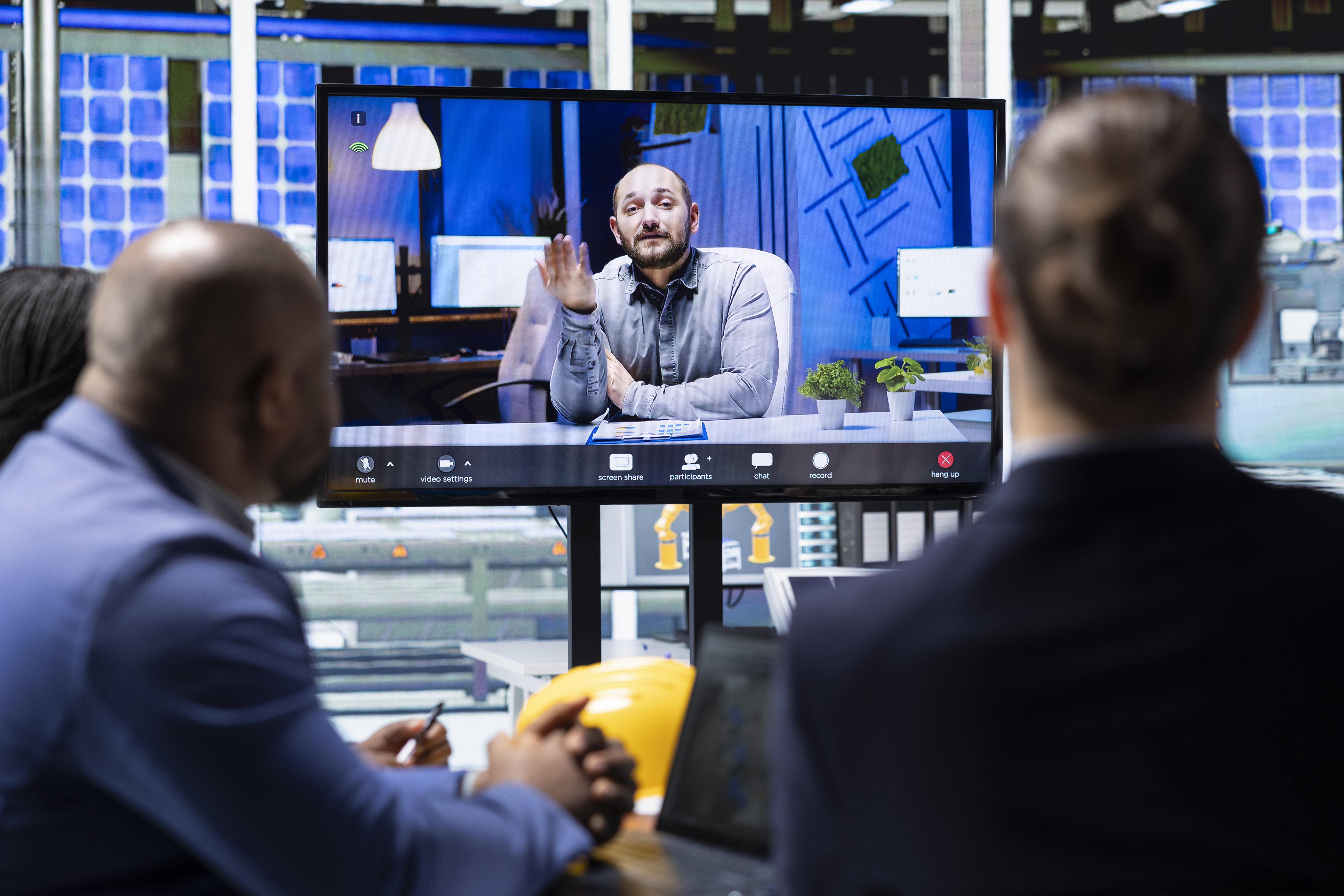
These are companies traditionally strong in installing CCTV systems, access control, alarms, and so on — but who also offer monitoring services, including two-way audio as part of their portfolio.
Strengths:
- One-stop shop: installation, hardware, network, monitoring
- Local presence, strong installer ecosystem
- Useful when you already have infrastructure you want upgraded
Considerations:
- Monitoring protocols and audio focus may not be as refined as a dedicated specialist
- Response times or audio-intervention scripting may vary
- May require longer contracts or tie-in with hardware purchase
Global Alarm/Technology Companies
Large companies that started with alarm systems or broad security/IT services are now entering the commercial monitoring market. They may offer two-way audio packages, but often in a more standardised or templated way.
Strengths:
- Global brand, large infrastructure, and support networks
- Scalability for multi-site organisations
- May offer attractive pricing for high volume
Considerations:
- Less flexibility in customisation and vertical-specific protocols
- Two-way audio may be an “add-on” rather than a core service
- Response times and operational details may differ from a specialist
3. How to Select the Right Provider for Two-Way Audio Surveillance Services
Selecting the right provider involves assessing technical capability, monitoring quality, compliance, and business fit. Here are the key criteria:
Monitoring Protocol & Operator Quality
- Ask: “What is your operator training process and response time?”
- Review: Voice-intervention script examples — how do they instruct on-site personnel or intruders?
- Verify: Will operators escalate to security staff or law enforcement? What triggers escalation?
- Internal link suggestion: Learn about the full process of CCTV monitoring for more details.
Audio & Camera Technology Compatibility
- Ensure: Cameras with built-in microphone and speaker, or audio attachments supported by your vendor.
- Confirm: Audio stream quality, noise cancellation, and remote speaking capability.
- Insight: For instance, Axis Communications describes how two-way audio can be added via connectivity hubs for cameras without built-in audio. (Axis Communications)
- Internal link suggestion: See what video surveillance solutions GCCTVMS offers.
Compliance & Data Protection
- Audio surveillance may have different legal/regulatory implications than video-only.
- Check: Notice to staff/visitors, consent requirements, retention policies, encryption, and access controls.
- Example: Audio recording without consent could breach local privacy laws — always confirmed in technical guides. (Axis Communications)
Integration & Network Resilience
- Verify: Will the system integrate with existing CCTV, alarms, access control?
- Confirm: Backup connectivity (e.g., cellular) in case of internet outage.
- Consider: Bandwidth required — audio is modest but still demands a stable network. External sources recommend careful placement and network planning. (Montavue)
False Alarm Rates & Verification Metrics
- One major benefit of live two-way audio is reducing false alarms.
- Ask: Can the provider supply statistics (e.g., % fewer false positives, average response time)?
- Internal link suggestion: See “What is remote CCTV monitoring and how does it work” for context. [https://gcctvms.com/what-is-remote-cctv-monitoring-and-how-does-it-work/]
Service Level Agreements (SLAs) & Cost Structure
- Ensure: Clear SLA for response times, uptime, and escalation.
- Compare: Pricing models — monthly monitoring, event-based fees, hardware vs service separation.
- Evaluate ROI: Theft/vandalism reduction, guard cost savings, insurance premium reductions.
4. Market Comparisons & External References
To illustrate how two-way audio surveillance services are delivered and referenced in the industry, here are some external resources:
- A UK home-security specialist explains two-way audio in video systems. (Lorex Corporation US)
- An article on “The Benefits of Two-Way Audio in Security Camera Systems” emphasizes active deterrence, visitor management, and emergency response. (Montavue)
- A blog from a global surveillance firm outlines technical audio capture, microphone integration, and a regulatory note. (Axis Communications)
- A comprehensive CCTV monitoring guide from a major manufacturer provides valuable insights into best practices for effective monitoring. (Alarm.com)
Using such references adds credibility and helps when externally linking. In your own article, you’ll want to link to these or similar authoritative sources to support your claims and boost SEO.
5. Real-World Use Cases: Industries & Scenarios
Let’s examine several industry scenarios where two-way audio surveillance services deliver tangible value.
Retail & Loss Prevention
Retail stores, particularly large chains, face ongoing risks of shoplifting, internal theft, and deliveries gone wrong. A two-way audio monitored system enables:
- Voice warnings when someone loiters near high-value items or enters a restricted area
- On-screen operator messaging to staff: e.g., “Check aisle 12 for suspicious customer”—reducing response time
- Real-time guide to delivery drivers or contractors, cutting error rates
Many retailers report theft drops of 40-60% within months of deploying two-way audio monitoring.
Construction Sites
Construction environments are busy, large, exposed, and high-risk: equipment, materials, and tools are constantly targeted. Two-way audio surveillance services help by:
- Monitoring perimeters 24/7 with remote voice warnings to trespassers
- Coordinating with guard staff on-site when an alert triggers
- Verifying an alert before dispatching security or police greatly reduces false call-outs and fines
Warehousing & Logistics
Warehouse hubs with loading bays, delivery traffic, vendor access, and forklifts benefit from interactive monitoring:
- Operators verifying vendor identity, directing drivers into the correct bays
- Live audio intervention if unsafe behaviour is detected (forklift operating in the wrong zone)
- Integration with inventory systems to reduce shrinkage and enhance process control
Healthcare & Residential Complexes
Hospitals and clinics handle sensitive access areas (pharmacies, restricted zones) and need high safety standards:
- Two-way audio allows the monitoring centre to speak with staff or visitors in real time
- Helps with visitor management at night, reducing risk in parking garages or exterior spaces
- Residential complexes benefit from voice verification of delivery, guest access, or suspicious activity in common areas
6. Implementation Checklist & ROI Considerations
Before you commit to a two-way audio surveillance system, use this checklist to ensure readiness and plan for ROI.
Implementation Checklist
- Site assessment – Map your premises: high-risk zones, delivery points, vulnerable perimeters, blind spots.
- Hardware readiness – Ensure cameras support two-way audio (mic + speaker), or upgrade accordingly.
- Consider network cabling (PoE), power backup, and bandwidth.
- Consider network cabling (PoE), power backup, and bandwidth.
- Network & connectivity – Verify upload bandwidth, set up backup (e.g., cellular).
- Monitoring centre integration – Confirm monitoring workflows, escalation paths, and multilingual support if needed.
- Compliance check – Audio rules vary by region: staff notices, visitor signage, retention policies.
- Pilot phase – Run a pilot on one site/zone, measure incident reductions, response times, and false alarm metrics.
- Full rollout & training – Roll out across full locations, train staff on alerts, LBAs (Live Business Alerts), and proper coordination.
- Review & optimise – Use monthly analytics to track incidents, cost savings (guards, insurance), and refine system settings.
ROI Considerations
- Reduced theft or vandalism – For instance, some sites cite 50% or more reduction in loss after live audio was added.
- Insurance premium savings – Many insurers recognise verified monitoring and may reduce premiums.
- Security guard cost reduction – Two-way audio monitored means fewer on-site guards for basic monitoring roles.
- Operational efficiency gains – E.g., fewer delivery errors, faster incident response.
- False alarm reduction – Live verification reduces unnecessary dispatches and associated costs/fines.
A specialist provider should be able to show case studies where clients recovered their entire investment within 6-12 months, thanks to savings and improved control.
7. Frequently Asked Questions
Is audio recording legal in business surveillance?
Yes — but it depends on your jurisdiction. Many places require staff notification and clear signage when audio is recorded. Best practice: consult local regulation and work with a provider that ensures compliance. For example, some manufacturers flag that audio capture must be implemented with awareness and legal correctness. (Axis Communications)
How does two-way audio differ from plain CCTV?
Plain CCTV records video (and sometimes audio) but generally cannot interact live. Two-way audio surveillance services enable live voice interaction — enabling deterrence, guidance, verification, and reduced response times.
Can I upgrade my existing system?
Yes. Many cameras can be retrofitted with speakers/microphones or connected to audio hubs. Monitoring centres can be integrated with existing feeds if the hardware is compatible.
What network requirements exist?
While video dominates bandwidth, two-way audio adds a small but meaningful requirement. Industry guidance recommends ensuring stable upload speeds and configuring noise cancellation in environments with heavy machinery or wind. (Montavue)
What industries benefit most?
While virtually any business can benefit, high-risk industries include: retail (loss prevention), construction sites (perimeter protection), warehousing/logistics (loading bay supervision), healthcare/residential (restricted access, visitor management).
8. Why GCCTVMS Is Positioned Strongly in the Market
If you’re evaluating providers for two-way audio surveillance services, consider why specialised firms like GCCTVMS stand out:
- Focused exclusively on live monitoring with two-way audio — not just hardware sales
- Tailored solutions for industries like retail, construction, logistics and healthcare
- Multi-region service coverage with local-language operators and knowledge of regional compliance
- Rapid implementation and custom protocols designed to match client risk profiles
- Clear analytics and ROI case studies supporting value-based decisions
If you require scalability, multi-site management, multilingual support, and a provider deeply experienced in two-way audio-driven monitoring, a specialist may deliver faster and more targeted results than a generalist integrator.
9. Conclusion
Two-way audio surveillance services represent a significant step beyond traditional video-only systems. For businesses and property owners handling high-value assets, heavy foot traffic, multiple zones, or complex operations, the ability to interact live — rather than simply record — can mean the difference between a minor incident and a serious loss.When choosing a provider, focus on monitoring quality, audio capability, compliance, integration, and real-world outcomes. Whether you go with a specialist monitoring firm, a traditional security integrator, or a large alarm company, ensure they have proven protocols for two-way audio, measurable performance, and clear alignment with your business needs.
If you’re ready to evaluate your security posture, consider a pilot of two-way audio surveillance services with a provider like GCCTVMS. With the right hardware, monitoring structure, and operational workflows, you could see measurable reductions in theft, false alarms, guard costs, and operational inefficiencies within months.Take the next step: schedule a free site assessment and get a tailored proposal — including hardware, monitoring protocols, and performance benchmarks — and secure your business and property for the long term.