What is CCTV Monitoring? Complete Beginner's Guide
CCTV Monitoring: The Security Solution You See Everywhere But Might Not Understand
Walk into any store, office building, or parking lot, and you'll see security cameras mounted on walls and ceilings. Most people assume these cameras simply record footage that someone might review later if something goes wrong. That's partially true—but it's not CCTV monitoring.CCTV monitoring means trained security professionals actively watch your cameras in real-time, identify genuine threats as they develop, and respond immediately to prevent crimes before they complete. It's the difference between documenting what happened and stopping it from happening.This guide explains what CCTV monitoring actually is, how it works, why businesses use it, and whether you need it for your property. No technical jargon—just clear answers to the questions first-time security buyers actually ask.
Understanding CCTV: What the Acronym Actually Means
CCTV stands for Closed-Circuit Television. "Closed-circuit" means the video signal transmits to specific monitors or recording devices, not broadcast publicly like regular television. Security cameras create a closed network where only authorized people access the footage.Modern systems might use IP (Internet Protocol) cameras transmitting over networks rather than traditional closed circuits, but the term "CCTV" remains industry standard for any security camera system, whether analog, digital, IP-based, or cloud-connected.The important distinction isn't the technology—it's what happens with the video feed. Cameras can record locally to hard drives, stream to cloud storage, or transmit to monitoring centers where operators watch in real-time. That last option is what we call CCTV monitoring services.For comprehensive information on this topic, read everything to know about CCTV monitoring to understand the complete picture of professional monitoring.
The Critical Difference: Recording vs. Monitoring
What Recording-Only Systems Do
Most basic security cameras simply record footage:
Recording Process:
- Cameras capture video continuously or when motion triggers
- Footage saves to DVR, NVR, or cloud storage
- Video stays stored for 7-90 days typically
- Someone reviews footage after discovering incidents
- Recorded evidence gets used for investigations
Recording Systems Are Passive: They document what happened but don't prevent anything. You learn about theft, vandalism, or trespassing after the fact. The cameras provide evidence for police and insurance—valuable, but reactive.A warehouse with recording-only cameras discovers $45,000 in stolen equipment Monday morning. The cameras recorded everything clearly. Police identify suspects from footage. Insurance processes the claim. But the theft still happened, operations were disrupted, and recovery takes weeks.
What CCTV Monitoring Actually Does
CCTV monitoring services add human operators who watch cameras actively:
Monitoring Process:
- Cameras transmit live video to monitoring centers
- Trained operators watch feeds continuously
- Operators identify suspicious activity immediately
- They verify threats through multiple camera angles
- Operators intervene using two-way audio warnings
- They dispatch police with verified threat information
- Monitoring continues until situation resolves
Monitoring Systems Are Proactive: They prevent crimes by responding while events unfold. Operators see suspicious people approaching restricted areas, announce they're being watched, and have police arriving within minutes—usually before theft occurs.The same warehouse with live CCTV monitoring gets an alert when unauthorized vehicles approach at 2 AM. Operators watch individuals attempt entry, announce monitoring through speakers, and dispatch police immediately. Suspects flee before accessing the building. Nothing stolen, no disruption, no insurance claim needed. Understanding the difference between monitoring and recording clarifies why professional monitoring prevents more than recording documents.
The Three Types of CCTV Monitoring Services
On-Site Monitoring
On-Site Setup: Guards stationed at your property watch camera feeds from security rooms. They patrol when necessary and respond to incidents immediately since they're already on location.
Best For:
- Large facilities (hospitals, universities, industrial complexes)
- Properties requiring physical security presence
- Locations with complex access control needs
- Sites where immediate physical response matters
Costs: $40,000-$120,000 annually per guard (salary, benefits, training). Multiple guards needed for 24/7 coverage increases costs to $160,000-$480,000 yearly.
Remote CCTV Monitoring
Remote Setup: Off-site monitoring centers watch your cameras from distant locations. Professional operators monitor multiple properties simultaneously, coordinating with local authorities when threats arise.Best For:
- Small to medium businesses
- Multi-location operations
- Properties without space for security rooms
- Organizations seeking cost-effective professional monitoring
Costs: $150-$600 monthly depending on camera count and service level—roughly 90% less than on-site guards while providing professional expertise. Learn more about what is remote CCTV monitoring and how does it work for detailed remote monitoring explanations.
Hybrid Monitoring
Hybrid Setup: Combines on-site personnel for physical response with remote monitoring centers providing continuous oversight. Remote operators watch cameras 24/7 while on-site guards handle situations requiring physical presence.Best For:
- High-security facilities
- Properties with valuable assets
- Locations requiring both observation and physical response
- Organizations wanting redundant security layers
Costs: $50,000-$150,000 annually for reduced on-site staffing plus $300-$800 monthly for remote monitoring—still cheaper than full on-site coverage while improving effectiveness.For detailed process information, check out what is the process of CCTV monitoring to understand operational workflows.
What Happens in a Professional Monitoring Center
The Technology Infrastructure
Professional CCTV monitoring services operate from certified facilities with:
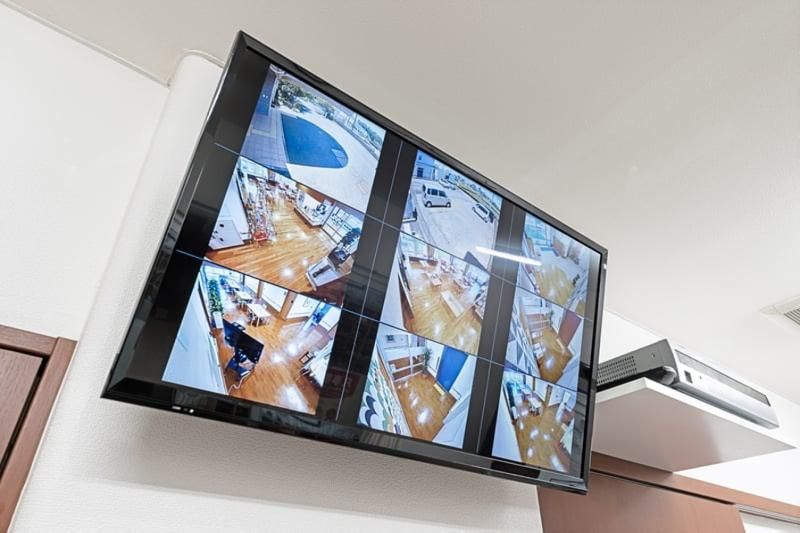
Redundant Systems:
- Primary and backup internet connections
- Generator power for outages
- Secondary monitoring locations activating if primary fails
- Multiple workstations per operator
Advanced Software:
- Video management platforms displaying multiple camera feeds
- AI-powered analytics flagging unusual activity
- Mapping systems showing property layouts
- Communication tools for police coordination
Quality Standards: UL-listed monitoring centers meet rigorous requirements for equipment redundancy, operator training, response protocols, and facility security. These certifications ensure reliable service when you need it most. Understanding proper CCTV monitoring operations provides insight into professional center requirements.
The Human Element
Trained Security Operators: Professional monitors aren't just watching screens. They receive weeks of training in:
- Threat identification and assessment
- Emergency response procedures
- Communication protocols with law enforcement
- Property-specific response plans
- De-escalation techniques
- Documentation standards
Operator Responsibilities:
- Monitor 50-150 cameras per operator (industry best practice)
- Verify threats through multiple camera angles
- Use two-way audio to announce monitoring
- Dispatch police with precise threat information
- Document incidents with timestamps and descriptions
- Coordinate with on-site personnel if present
- Provide detailed reports to property owners
Response Times: Professional monitoring centers respond to alerts within 15-60 seconds. Operators assess situations, verify genuine threats, and coordinate response while events unfold—not hours later during footage review. For business-specific applications, read the 24x7 guide to CCTV monitoring for business security covering professional monitoring standards.
Who Needs CCTV Monitoring Services?
Businesses Benefiting Most from Professional Monitoring
Retail Stores: Shoplifting, employee theft, and customer disputes require real-time response. Live CCTV monitoring prevents theft attempts, documents incidents, and protects against false liability claims. Average theft reduction: 67%.
Warehouses and Distribution Centers: High-value inventory and 24/7 operations make warehouses prime theft targets. Remote monitoring prevents after-hours equipment and inventory theft. For warehouse-specific solutions, explore warehouse security monitoring applications.
Construction Sites: Equipment theft costs the construction industry $400 million annually. Mobile remote CCTV monitoring services protect temporary sites without permanent infrastructure, preventing theft of generators, tools, and materials.
Office Buildings: After-hours access, visitor management, and parking lot safety require monitoring beyond recording. Professional monitoring ensures employee safety and prevents unauthorized access.
Healthcare Facilities: Patient safety, controlled substance protection, and parking lot security make monitoring necessary. HIPAA-compliant monitoring protects patients while preventing theft and ensuring staff safety.
Residential Properties: Homeowners in high-crime areas or with vacation properties use monitoring for break-in prevention, package theft deterrence, and emergency response. Families monitoring elderly relatives remotely benefit from professional 24/7 live CCTV monitoring services. For residential applications, review best nanny cams monitoring provider options.
When Recording-Only Systems Are Sufficient
Low-Risk Situations:
- Small offices in safe neighborhoods
- Residential properties primarily needing package delivery verification
- Facilities with minimal valuable assets
- Properties with full-time on-site staff
- Locations where post-incident evidence suffices
If your primary concern is documentation rather than prevention, recording-only systems cost less initially. However, consider whether prevented incidents save more than monitoring fees. Most businesses losing $20,000+ annually to theft benefit from professional monitoring.
The Technology Making Modern CCTV Monitoring Possible
IP Cameras and Network Connectivity
Modern CCTV monitoring relies on IP (Internet Protocol) cameras transmitting video over networks:Advantages of IP Cameras:
- Higher resolution (1080p to 4K) than analog cameras
- Remote access from any internet connection
- Easy expansion without new cabling
- Integration with other security systems
- Advanced analytics capabilities
Network Requirements: Each HD camera requires 2-4 Mbps upload bandwidth. A 10-camera system needs 20-40 Mbps dedicated to surveillance. Most businesses require internet upgrades supporting professional monitoring. For technical details, see this CCTV monitoring guide explaining system requirements.
Cloud-Based vs. Local Recording
Cloud Recording: Video uploads to secure servers accessible from anywhere. Monitoring centers access live feeds and recordings through cloud platforms without direct network access to your property.
Advantages: Remote access, automatic backups, unlimited storage options, no on-site equipment maintenance.
Disadvantages: Monthly fees ($10-$50 per camera), bandwidth requirements, internet dependency.
Local Recording: Video saves to on-site DVRs or NVRs. Monitoring centers access cameras through secure network connections.
Advantages: No monthly storage fees, works during internet outages (with cellular backup), faster local playback.
Disadvantages: Storage limits (30-90 days typical), vulnerable to theft or damage, requires on-site maintenance.
Many businesses use hybrid approaches: local recording for primary storage with cloud backup for critical cameras. Understanding CCTV monitor technology helps evaluate system options.
Two-Way Audio Communication
Modern monitoring includes audio capabilities allowing operators to speak through camera systems:
Two-Way Audio Benefits:
- Operators announce monitoring to intruders
- Warn trespassers before police dispatch
- Provide instructions during emergencies
- Communicate with delivery personnel
- Assist customers or employees needing help
Two-way audio intervention stops 78% of theft attempts before completion. Criminals hearing "You are being monitored, police have been dispatched" typically flee immediately. This technology transforms monitoring from passive observation to active deterrence.
AI-Powered Analytics
Artificial intelligence enhances live CCTV monitoring through:
Smart Detection:
- Distinguishing people from animals or weather
- Identifying vehicles and license plates
- Recognizing loitering or unusual patterns
- Detecting perimeter breaches
- Flagging abandoned objects
Reduced False Alarms: AI filters 90-95% of false alerts before reaching operators. This means fewer police dispatches for harmless activity (animals, weather, shadows) and faster response to genuine threats operators don't need to dismiss obvious false positives. For comprehensive live monitoring information, review live monitoring capabilities and applications.
Costs and Value of CCTV Monitoring Services
What Professional Monitoring Actually Costs
Equipment (One-Time):
- Cameras: $200-$1,500 each
- Recording system: $500-$3,000
- Installation: $200-$800 per camera
- Total small business (10 cameras): $8,000-$25,000
Monthly Monitoring Fees:
- Residential (1-4 cameras): $50-$150
- Small business (5-15 cameras): $150-$350
- Medium business (20-40 cameras): $350-$600
- Large facility (50+ cameras): $600-$1,200
Additional Costs:
- Cloud storage: $10-$50 per camera monthly
- Mobile app access: $0-$30 monthly
- Two-way audio: Often included
- AI analytics: $30-$100 monthly
ROI: When Monitoring Pays for Itself
Theft Prevention: Businesses averaging $50,000 annual theft losses install monitoring costing $25,000 equipment + $3,600 annually ($300/month). Monitoring prevents 70% of theft attempts, saving $35,000 yearly. System pays for itself in 10 months, then saves $31,400 annually thereafter.
Insurance Discounts: Commercial property insurance offers 15-25% discounts for professionally monitored systems. A business paying $12,000 annually saves $1,800-$3,000 yearly—offsetting $150-$250 monthly monitoring fees entirely.
Liability Protection: One prevented fraudulent slip-and-fall claim ($75,000 average settlement) pays for 15+ years of monitoring service. Video evidence from monitored systems settles disputes faster and cheaper than litigation.
Operational Efficiency: Monitoring reveals time theft, process inefficiencies, and safety violations worth thousands monthly in productivity improvements beyond security benefits. To evaluate monitoring providers, compare companies offering 24/7 live CCTV monitoring in the USA for quality options.
Getting Started with CCTV Monitoring
Assessing Your Monitoring Needs
Questions to Answer:
- What are you protecting? (Inventory, equipment, people, property)
- What threats do you face? (Theft, vandalism, liability, safety)
- When are you most vulnerable? (After-hours, weekends, specific times)
- What's your current loss rate? (Annual theft, damage, liability costs)
- Do you need prevention or documentation? (Active response or evidence)
If current losses exceed $10,000 annually or immediate response matters (employee safety, high-value assets), professional CCTV monitoring services typically provide positive ROI within 12-18 months.
Choosing Between Recording and Monitoring
Choose Recording-Only When:
- Primary goal is evidence collection
- Incidents are infrequent (less than quarterly)
- Losses are minimal (under $5,000 annually)
- Budget is extremely tight (under $200 monthly)
- Property has full-time on-site supervision
Choose Professional Monitoring When:
- Prevention matters more than documentation
- Property is unstaffed during vulnerable hours
- Assets worth protecting exceed $50,000
- Theft or security incidents occur regularly
- Employee or customer safety is priority
- Insurance requires monitored systems
Selecting a CCTV Monitoring Provider
Provider Evaluation Criteria:Monitoring Center Quality:
- UL listed or TMA certified?
- Monitoring center location (local/regional/offshore)?
- Operator-to-camera ratios (under 150:1 preferred)?
- Response time guarantees?
Service Capabilities:
- 24/7 coverage or business hours only?
- Two-way audio intervention?
- Police dispatch coordination?
- Custom response protocols?
- Mobile app access?
Pricing Transparency:
- Clear monthly fee structure?
- Hidden costs disclosed upfront?
- Contract length and terms?
- Cancellation policies?
References and Track Record:
- How long in business?
- References from similar businesses?
- Online reviews and ratings?
- Insurance carrier approval?
For comprehensive monitoring services, explore 24/7 video surveillance monitoring services offered by professional providers.
Common Misconceptions About CCTV Monitoring
Misconception #1: "I can monitor my own cameras from my phone." Reality: Self-monitoring means watching cameras during your available time. Professional operators watch 24/7/365 without breaks, vacations, or distractions. Alert fatigue causes self-monitors to ignore notifications after 50+ daily false alarms.
Misconception #2: "Monitoring is just recording with someone watching." Reality: Professional monitoring includes threat verification, two-way audio intervention, police coordination, and incident documentation that self-monitoring can't provide.
Misconception #3: "Cameras are enough to deter crime." Reality: Visible cameras reduce opportunistic crime but don't stop determined criminals. Professional monitoring actively intervenes, stopping 78% of theft attempts before completion.
Misconception #4: "Monitoring is too expensive for small businesses." Reality: Monitoring costs $150-$350 monthly for most small businesses—often less than one prevented theft incident. Insurance discounts frequently offset 50-100% of monitoring fees.
Misconception #5: "All monitoring services are basically the same." Reality: Monitoring quality varies dramatically based on operator training, center certifications, response times, and service protocols. Budget monitoring costing $100/month operates very differently from professional monitoring at $300/month.
Taking the Next Step Toward Better Security
CCTV monitoring transforms passive security cameras into active protection systems. Professional operators watching your property 24/7 prevent crimes rather than just documenting them, saving businesses thousands while providing peace of mind.
Whether you operate a retail store, warehouse, office, construction site, or residential property, understanding what remote CCTV monitoring services provide helps you make informed decisions about protecting your assets, employees, and operations.
Ready to Upgrade from Recording to Professional Monitoring?
GCCTVMS provides comprehensive 24/7 live CCTV monitoring services with UL-listed monitoring centers, trained operators, two-way audio intervention, and guaranteed response times. We serve all industries—retail, warehouses, construction, healthcare, offices, and residential properties.
Get Started Today:📞 Call: +1 501 621 0002
📧 Email: Info@gcctvms.com
🌐 Visit: Contact GCCTVMS
Stop just recording what happens. Start preventing it.