Video Surveillance Companies Offering Two-Way Audio
Video Surveillance Companies Offering Two-Way Audio for Active Crime Prevention
Traditional video surveillance systems have a fundamental limitation—they record crimes but cannot stop them. A burglar breaking into your warehouse at midnight triggers an alarm, cameras capture footage, but by the time anyone responds, the theft is complete and the criminals have fled. This gap between detection and intervention has plagued property security for decades, forcing organizations to choose between expensive on-site security guards or accepting that their cameras merely document losses rather than prevent them.
Two-way audio video surveillance changes this equation entirely. This technology enables professional monitoring operators to communicate directly through your cameras, issuing immediate warnings to intruders, coordinating real-time police response, and often stopping crimes before any damage or loss occurs. Rather than discovering a break-in when you arrive at work the next morning, monitoring professionals detect the intrusion within seconds, verify the threat, and take action while suspects are still on your property.
Professional video surveillance monitoring services represent the convergence of advanced camera technology with trained human expertise, creating security solutions that combine the consistency of automated detection with the judgment and intervention capability that only human operators can provide.
What Is Two-Way Audio Video Surveillance and How Does It Work?
Two-way audio video surveillance extends beyond traditional camera systems by adding interactive communication capability that transforms monitoring from observation to intervention. While standard surveillance cameras capture and record video footage, they function as silent witnesses that document events without influencing outcomes. Two-way audio systems integrate speakers and microphones into camera units, creating communication channels that professional monitoring operators use to interact directly with people in the surveilled area.
The Technology Behind Interactive Video Surveillance
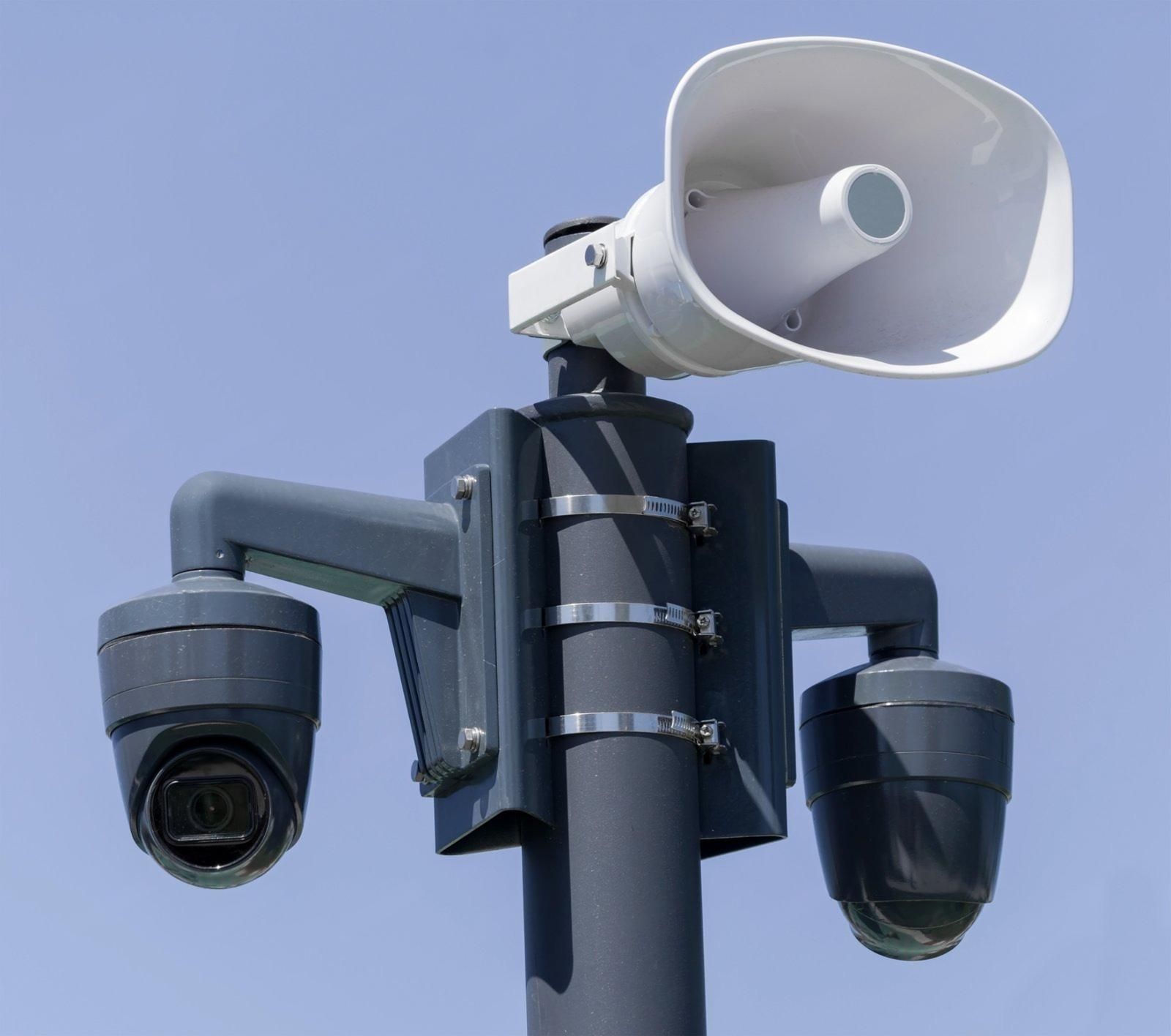
The technical foundation of two-way audio surveillance builds upon standard network camera infrastructure with specific additions that enable real-time communication. Modern systems use Internet Protocol cameras that transmit video and audio data over network connections, allowing monitoring centers to receive live feeds and communicate back through the same cameras. Each camera unit incorporates a high-quality microphone capable of capturing audio within fifteen to thirty meters depending on environmental conditions and ambient noise levels. These microphones use noise cancellation technology to filter out wind, rain, and background sounds, ensuring that monitoring operators hear clearly enough to assess situations accurately.
The speaker component requires sufficient power output to be heard clearly at distances where the camera can capture video, with professional systems typically delivering ninety decibels or higher. This volume level ensures that audio warnings cut through environmental noise and reach intruders anywhere within the camera's field of view. Weather-resistant outdoor cameras require speakers and microphones rated to IP66 standards or higher, protecting sensitive audio components from rain, dust, and temperature extremes while maintaining audio quality across all conditions.
Understanding the fundamentals of comprehensive video surveillance systems helps organizations recognize the technical requirements necessary for reliable two-way audio communication and effective monitoring services.
The Monitoring and Response Process
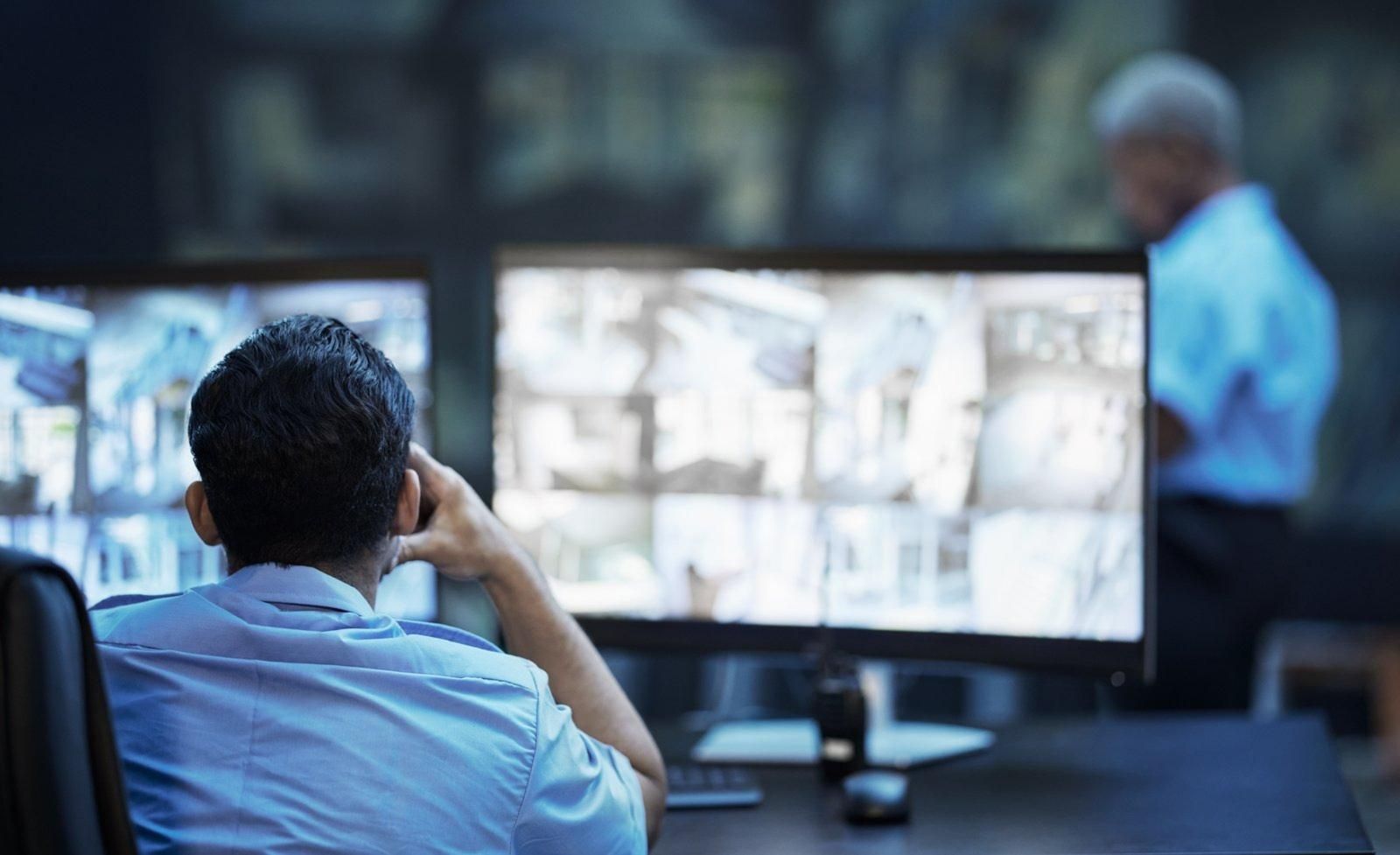
The operational workflow of two-way audio surveillance services demonstrates how technology and human expertise combine to create effective crime prevention. Modern camera systems employ motion detection algorithms that continuously analyze video feeds, identifying movement patterns that suggest potential security threats. When motion triggers an alert, the system immediately notifies monitoring operators at professional surveillance centers, transmitting live video feeds along with the alert notification. Trained operators receive these alerts within seconds and begin visual assessment of the situation, determining whether the motion represents a genuine security threat or a false alarm.
This human verification step distinguishes professional monitoring services from automated systems. Operators apply experience and judgment to assess context—recognizing the difference between a delivery driver at a loading dock during business hours versus an unauthorized individual attempting to force entry at midnight. When operators confirm a legitimate threat, they activate the two-way audio system, using the camera's speaker to issue clear warnings directly to the intruders. These warnings typically announce that the property is being actively monitored, that police have been notified, and that suspects should leave immediately.
Professional video monitoring services combine advanced technology with trained operators who make split-second decisions during security incidents, delivering intervention capability that passive recording systems cannot match.
Simultaneously with issuing audio warnings, monitoring operators contact local police or security response teams, providing verified visual confirmation of the intrusion along with specific details about suspect numbers, locations, and actions. This real-time intelligence dramatically improves police response effectiveness, as officers arrive knowing exactly what situation they face rather than responding to generic alarm notifications. Throughout the incident, operators continue monitoring and updating responding units, tracking suspect movements and providing critical information that enhances both officer safety and apprehension likelihood.
Why Two-Way Audio Transforms Video Surveillance Effectiveness
The addition of interactive audio communication to video surveillance creates measurable improvements in security outcomes that extend far beyond what recording-only systems achieve. Industry data consistently demonstrates that two-way audio surveillance services deliver substantially better security outcomes than passive recording systems. Research tracking thousands of intrusion attempts shows that seventy to eighty percent of suspected criminals immediately cease their activities and flee when they hear monitoring operators issue audio warnings through surveillance cameras.
Organizations implementing remote CCTV monitoring services operating around the clock report significant reductions in both attempted and completed crimes, with many properties experiencing zero successful break-ins after activating professional monitoring services.
The timing of intervention explains much of this effectiveness. Traditional alarm response typically involves a fifteen to thirty minute gap between initial detection and police arrival, providing ample time for determined criminals to complete thefts and escape. Two-way audio monitoring services compress this timeline dramatically, with operators issuing warnings within sixty seconds of threat detection and police receiving verified notifications within two minutes. Crimes that require more than a few minutes to complete become impractical when criminals know that police are actively en route with precise location information and suspect descriptions.The psychological impact of two-way audio surveillance extends beyond mere detection notification, fundamentally altering the risk-reward calculation that criminals make when targeting properties. When an operator's voice emerges from a camera speaker, several psychological factors converge to create powerful deterrence. The surprise element disrupts the criminal's operational plan, introducing an unexpected variable that requires reassessment of the situation. Hearing a human voice creates a personal confrontation that recordings cannot replicate, triggering social inhibitions that operate even in criminal contexts. The explicit announcement that police have been notified creates urgency and raises the perceived risk of apprehension dramatically.
Cost Comparison with Traditional Security Methods
The financial case for two-way audio surveillance services becomes compelling when compared against traditional security staffing approaches. On-site security guards represent the conventional solution for properties requiring active threat intervention, but the costs prove prohibitive for most organizations. A single security guard position typically requires annual compensation of twenty-five thousand to thirty-five thousand pounds. Providing continuous coverage requires three to four guard positions to cover all shifts, creating total annual staffing costs of seventy-five thousand to one hundred forty thousand pounds or more.
Professional video monitoring services with two-way audio capability typically cost between two hundred and five hundred pounds monthly depending on the number of cameras monitored, property size, and specific service requirements. This translates to annual costs of two thousand four hundred to six thousand pounds—a fraction of security guard expenses while often providing superior coverage.
Organizations implementing remote CCTV monitoring services typically achieve return on investment within three to six months through combined savings from reduced security staffing, prevented losses, and lower insurance premiums.
Insurance premium reductions provide additional financial benefits that often offset monitoring service costs partially or entirely. Insurance carriers recognize professionally monitored surveillance as a significant risk reduction measure and frequently offer premium discounts of ten to twenty percent for commercial properties and five to fifteen percent for residential properties that implement certified monitoring services.
Industries That Benefit Most from Two-Way Audio Video Surveillance
Two-way audio surveillance services deliver security improvements across virtually all property types and business sectors. Understanding how interactive monitoring addresses industry-specific security challenges helps decision-makers recognize applicable solutions for their particular circumstances.
Retail Premises and Loss Prevention
Retail environments face unique security challenges that make two-way audio surveillance particularly valuable. Shoplifting represents a persistent problem that traditional passive cameras document but rarely prevent. Two-way audio monitoring services enable operators to issue warnings to suspected shoplifters before they exit the premises, often resulting in merchandise being returned to shelves as individuals realize they are being actively watched. This intervention occurs without requiring staff confrontation, avoiding the safety risks and liability concerns that physical intervention by retail employees creates.
After-hours break-in attempts targeting cash registers, safes, and high-value merchandise represent even more significant threats that two-way audio surveillance addresses effectively. Monitoring operators detect these intrusion attempts immediately and issue warnings while simultaneously alerting police, often causing suspects to flee before gaining full entry.
Professional monitoring services with comprehensive 24/7 coverage provide the continuous vigilance necessary to detect and respond to sophisticated organized retail crime operations.
Construction Sites and Equipment Protection
Construction sites present security challenges that traditional approaches struggle to address effectively. These temporary work locations often occupy large areas with multiple access points, house valuable equipment and materials worth hundreds of thousands of pounds, and sit empty overnight and on weekends when workers are absent. Two-way audio video surveillance services address these challenges through strategically positioned cameras covering entry points, equipment storage areas, and high-value material stockpiles. When motion detection identifies potential intruders during off-hours, monitoring operators immediately assess whether activity represents legitimate security patrols, late-working contractors, or unauthorized presence.
Warehouses and Distribution Centers
Warehouse and distribution facilities face security challenges driven by their large physical footprints, valuable inventory concentrations, and multiple access points necessary for operational efficiency. Two-way audio surveillance services provide comprehensive coverage across warehouse perimeters and interior spaces, with monitoring operators maintaining continuous vigilance over areas that would require numerous security guards to patrol effectively. When unauthorized individuals approach loading docks or attempt to scale perimeter fencing, operators issue immediate warnings while documenting entire incidents with audio and video recordings.
Healthcare Facilities and Patient Safety
Healthcare environments present unique security requirements that balance patient privacy with safety needs for staff, visitors, and the facilities themselves. Hospital parking areas, emergency department entrances, and pharmaceutical storage locations all face security threats. Two-way audio surveillance services address these challenges while respecting healthcare privacy regulations that restrict monitoring in treatment areas and patient rooms. Parking area security particularly benefits from interactive monitoring, as healthcare facilities often operate twenty-four hours and require staff to work overnight shifts when parking areas become vulnerable to crime.
Residential Properties and Estate Management
Residential property security has traditionally relied on alarm systems that notify monitoring centers of potential break-ins but provide no intervention capability beyond alerting authorities. Two-way audio surveillance services extend residential protection by enabling monitoring operators to issue warnings to potential intruders before break-ins occur, often preventing crimes entirely rather than simply documenting them. When motion detection identifies individuals approaching entry points during homeowner absence, operators assess whether activity represents legitimate visitors, delivery personnel, or suspicious behavior.
Selecting Video Surveillance Companies: What to Look For
The decision to implement two-way audio surveillance services represents a significant security investment that requires careful provider evaluation to ensure effective results. Understanding evaluation criteria enables security decision-makers to distinguish between providers offering genuine professional monitoring services and those simply selling equipment with minimal operational support.
Camera specifications represent the first evaluation point, as image quality directly impacts monitoring operators' ability to assess threats accurately. Modern professional systems should provide high-definition video resolution of at least 1920x1080 pixels, ensuring clear imagery that reveals faces, vehicle registration plates, and activities even when subjects remain at significant distances from cameras. Night vision capability proves equally critical, as most property crimes occur during overnight hours when natural light is absent.Understanding comprehensive guides to video surveillance technology and capabilities helps organizations recognize technical specifications that indicate professional-grade monitoring services.Professional monitoring centers should hold recognized industry certifications demonstrating adherence to operational standards, with National Security Inspectorate Gold accreditation or Security Systems and Alarms Inspection Board certification representing the benchmark credentials in the United Kingdom. Operator training programs and qualification requirements indicate service quality that basic equipment monitoring cannot match. Professional surveillance companies employ operators who receive extensive training in threat assessment, communication techniques, emergency response coordination, and the specific security characteristics of different property types and industries.
Response time guarantees represent concrete performance commitments that distinguish professional services from informal monitoring arrangements. Effective surveillance requires that operators verify potential threats within sixty seconds of alert generation, enabling immediate audio warnings and police notifications that maintain intervention effectiveness.
Visit resources addressing frequently asked questions about surveillance monitoring services to understand common pricing structures, contract terms, and service provisions that professional companies typically offer.
GCCTVMS: Leading Provider of Two-Way Audio Video Surveillance Services
GCCTVMS delivers comprehensive video surveillance monitoring services with two-way audio capability across all industries requiring active security intervention and crime prevention. Our approach focuses exclusively on providing professional monitoring services rather than equipment sales, ensuring that clients receive expert security oversight without pressure to purchase unnecessary hardware or complex system installations. We work with existing camera infrastructure whenever possible, adding professional monitoring capability that transforms passive recording systems into active security solutions.
Explore our complete range of video surveillance monitoring solutions designed specifically for businesses and properties requiring active security intervention.